Make the business easy to understand.
Positioning, service structure, page hierarchy, and content should tell visitors quickly what you do and why it matters.
LogicAide designs and redesigns professional websites that combine positioning, content, visual identity, SEO structure, user experience, and conversion paths into one clear digital presence.
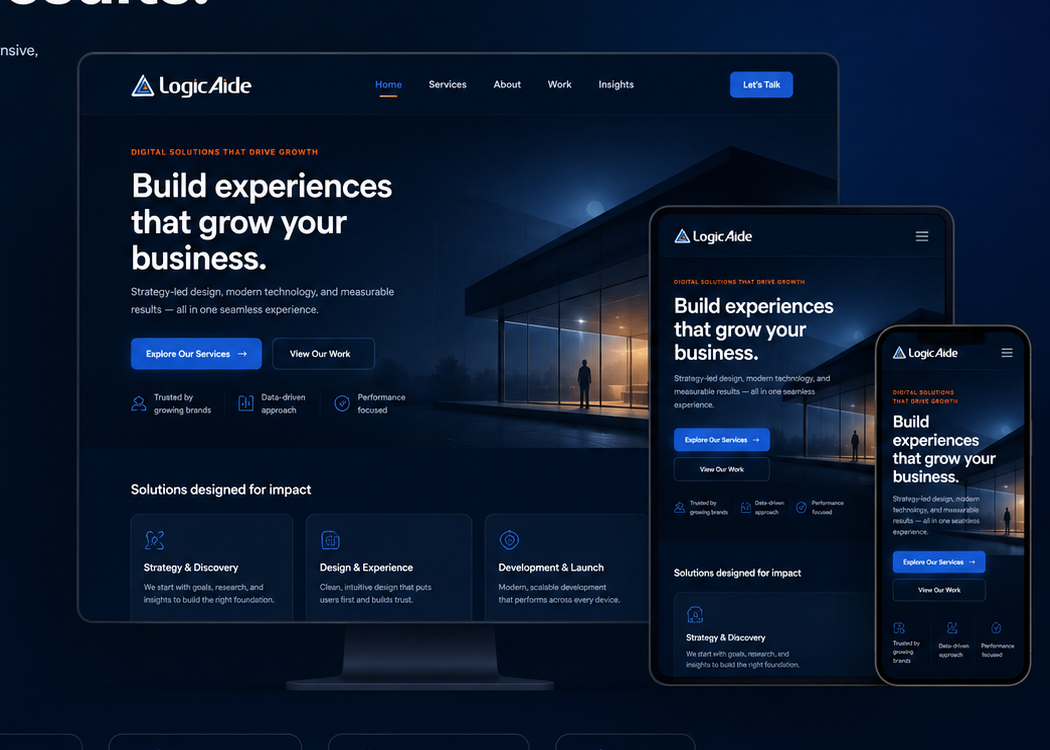
A professional website has to explain the offer, establish credibility, support search visibility, and move the right visitor toward a conversation or another meaningful next step.
Positioning, service structure, page hierarchy, and content should tell visitors quickly what you do and why it matters.
Typography, imagery, spacing, motion, content quality, and visual consistency shape how professional the company feels.
Calls to action, service paths, contact options, and internal links should support the business goal behind the page.
We treat the website as a coordinated combination of strategy, content, design, search structure, interaction, and implementation.
Organize services, industries, resources, and conversion paths around how visitors evaluate the business.
Page system →Typography, color, spacing, cards, imagery, movement, and detail that feel intentional and current.
Visual system →Clarify the offer, explain capabilities, strengthen differentiation, and answer the questions visitors actually have.
Content system →Logical headings, internal links, crawlable text, metadata, page intent, and technically sound foundations.
SEO foundation →Layouts are shaped intentionally across devices instead of simply compressed from a desktop design.
Responsive UX →Maintainable implementation that preserves practical editing while keeping the website custom and polished.
Implementation →A redesign does not have to mean starting over. Useful URLs, content, SEO value, integrations, and business logic can often be preserved while the experience around them is rebuilt.
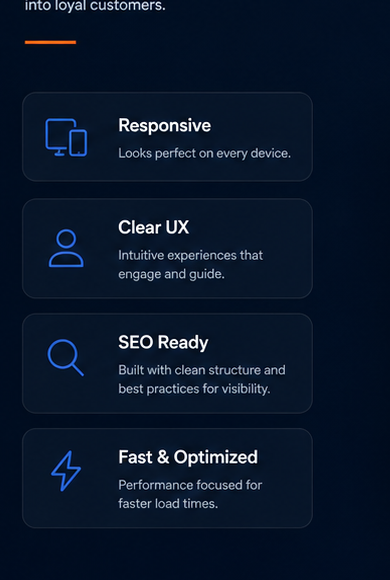
Search optimization works best when page intent, headings, internal links, crawlable content, performance, and metadata are considered from the beginning—not added after the design is complete.
Strong websites guide visitors through the information they need in the order they need it, without forcing them to work to understand the company.
Clear value proposition and visual credibility.
Services, capabilities, industries, and differentiation.
Proof, expertise, process, quality, and consistency.
Contact, form, consultation, quote, or specific CTA.
Audience, services, positioning, competitors, current site, SEO considerations, and conversion goals.
Navigation, page hierarchy, internal links, conversion paths, and major content sections.
Typography, color, imagery, page composition, cards, buttons, movement, and responsive behavior.
Develop the pages in a maintainable structure while preserving the design language and editing flexibility.
Review content, responsiveness, spacing, SEO details, CTAs, performance, and visual consistency.
Yes. Existing WordPress sites can often be redesigned while preserving useful content, URLs, plugins, and other working elements.
Yes, when that is part of the implementation goal. The site can remain manageable without forcing the design into a generic template.
Yes. Website work can include positioning, service-page copy, headings, calls to action, supporting content, and SEO-aware structure.
Yes. URL preservation, redirects where needed, headings, internal linking, metadata, crawlable text, and other technical considerations can be planned before launch.
We can redesign the experience while preserving the parts that already have value.