Understand what the searcher actually wants.
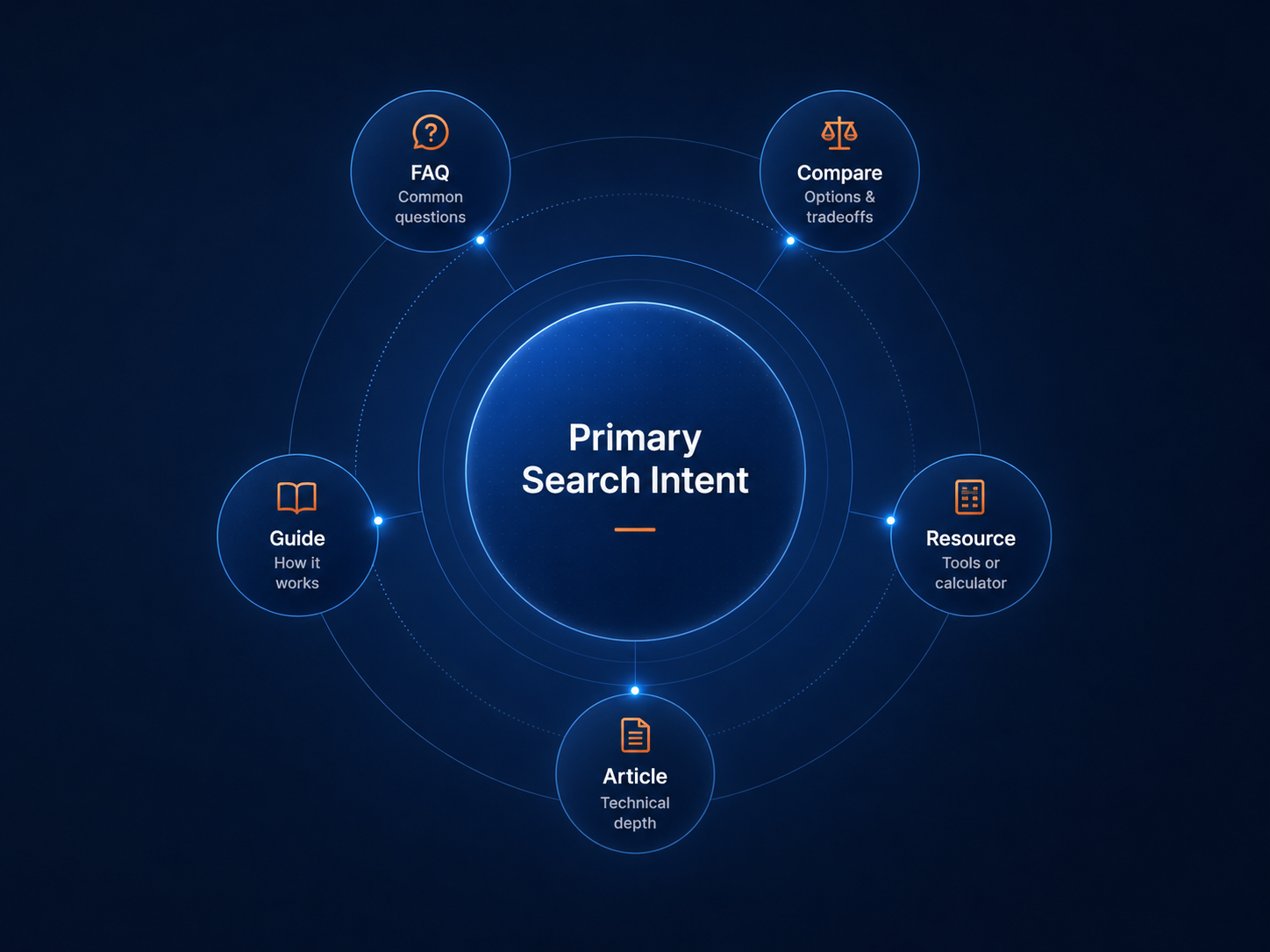
Different queries require different pages: service pages, technical guides, comparisons, FAQs, tools, or other useful formats.
LogicAide combines SEO strategy, technical structure, service-page optimization, content planning, internal linking, and performance analysis to help the right audience discover and understand your business.
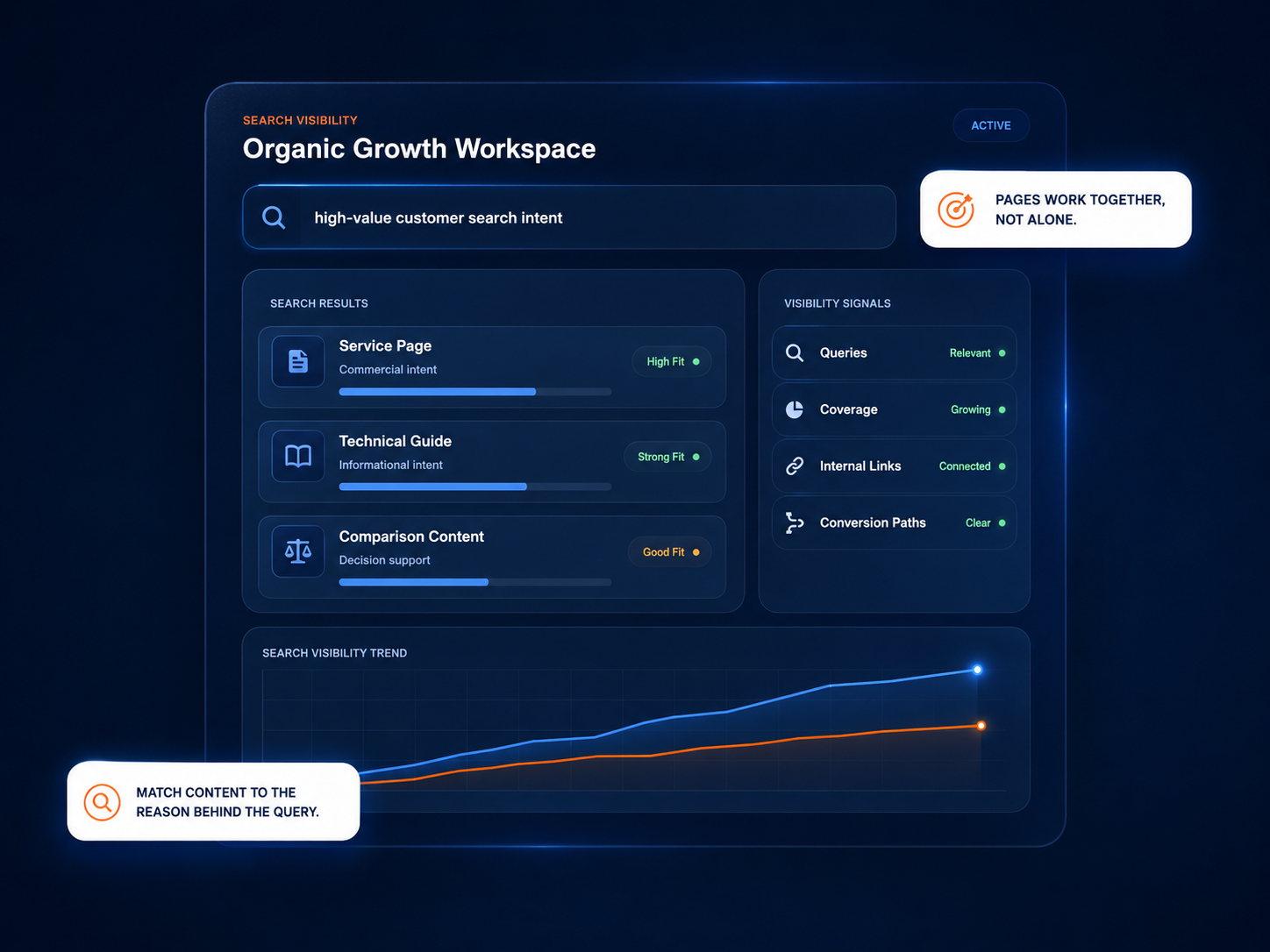
Ranking is not the only goal. The right page should appear for the right search, explain the topic clearly, and give the visitor a useful next step.
Different queries require different pages: service pages, technical guides, comparisons, FAQs, tools, or other useful formats.
Page titles, headings, internal links, content hierarchy, and crawlable text should reinforce one focused subject.
Useful depth, clear explanations, original perspective, technical accuracy, and strong organization give the page a reason to exist.
SEO performs better when the website architecture, content strategy, and conversion path are planned as one system.
Identify the topics, questions, service terms, comparison searches, and customer language that matter to the business.
Find demand →Improve titles, headings, copy, internal links, metadata, media context, and page structure without keyword stuffing.
Improve relevance →Create useful articles, guides, FAQs, comparisons, explainers, and resources around real customer questions.
Build authority →Connect related services, supporting articles, tools, and conversion pages so the site behaves like a coherent knowledge system.
Connect topics →Review indexing, redirects, duplicate paths, sitemap behavior, page performance, mobile experience, and structured page foundations.
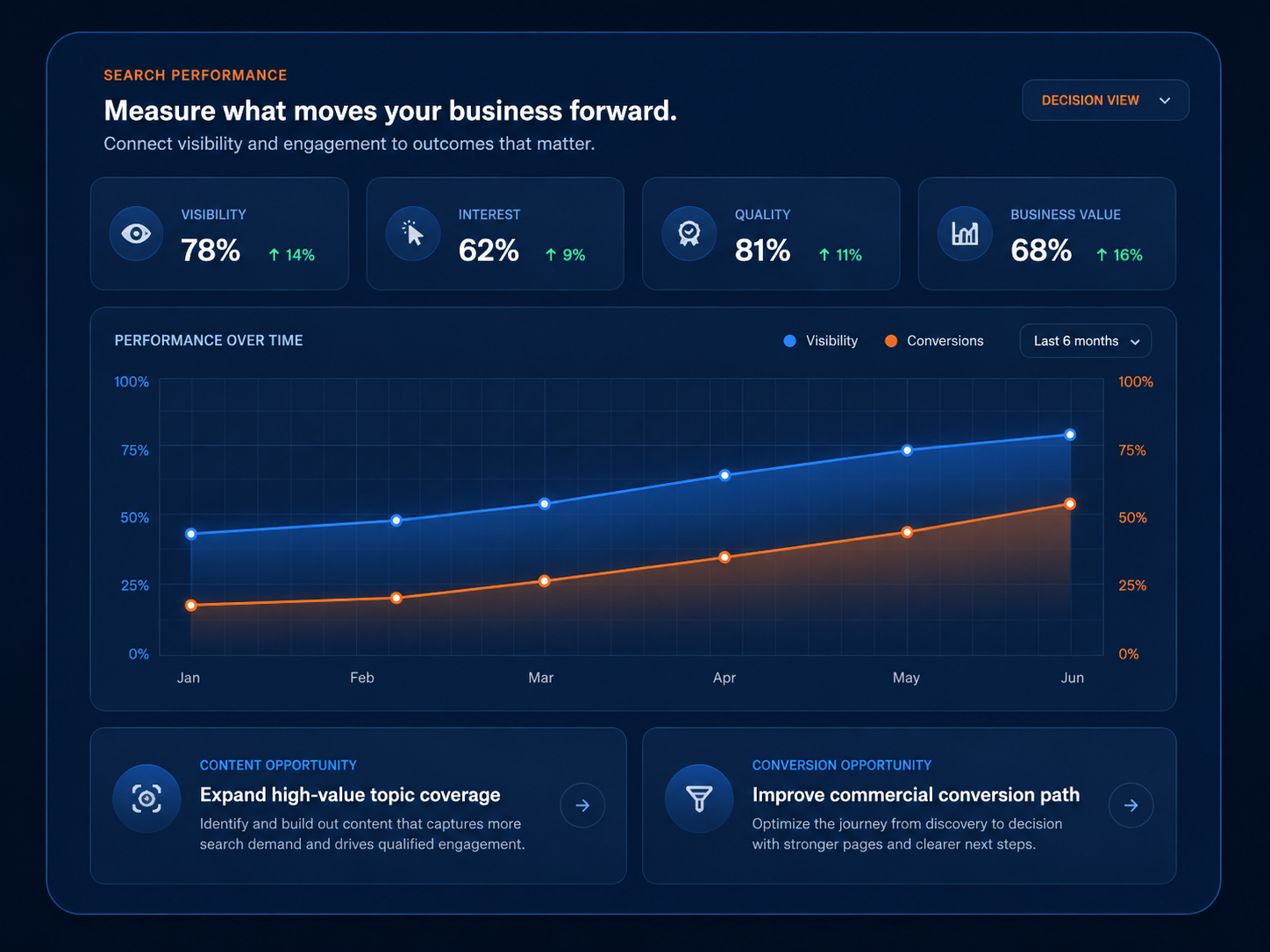
Strengthen foundation →Track visibility, clicks, page performance, queries, conversion behavior, and content opportunities to guide the next priority.
Measure & refine →Content should help customers move from discovery to understanding and then toward a relevant service, product, or conversation.
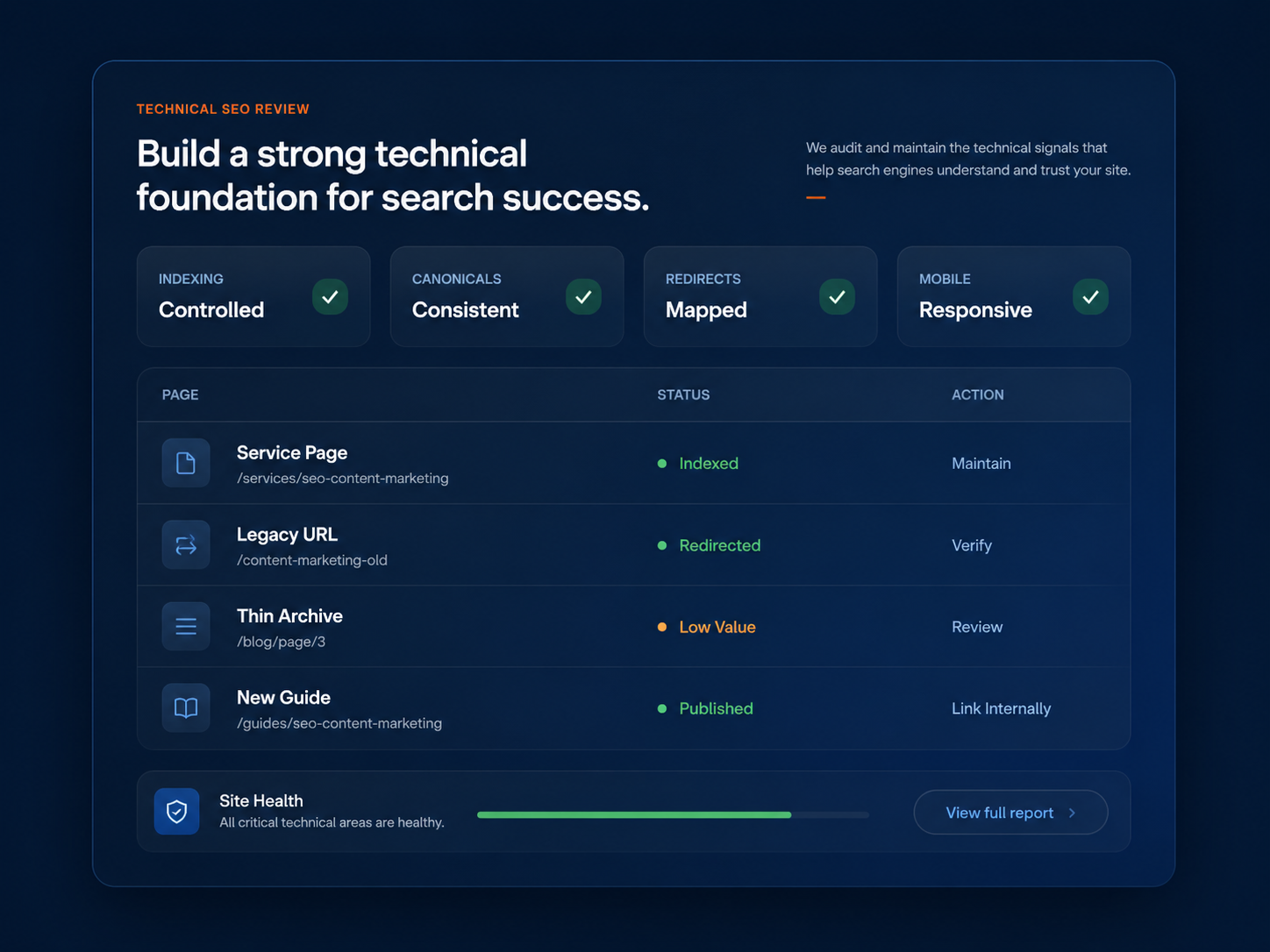
Strong content can still struggle when the site creates conflicting URLs, weak internal linking, indexing problems, poor mobile behavior, or technical friction.
SEO reporting should connect visibility and clicks to page quality, engagement, conversion paths, and actual business opportunities—not stop at rankings.
Review services, audience, search behavior, competitors, existing pages, technical structure, and current visibility.
Define core pages, supporting topics, search intent, internal links, and priority gaps.
Write or improve service pages, technical guides, FAQs, comparisons, resources, and other relevant content.
Refine headings, metadata, links, crawl paths, redirects, page performance, and technical SEO details.
Review queries, page performance, engagement, conversions, and emerging content opportunities.
No. Keywords are useful signals, but the real focus is search intent, useful content, page structure, technical quality, internal linking, and business relevance.
Yes. Existing pages can often be improved through clearer targeting, stronger structure, better internal links, stronger copy, and more complete supporting information.
Yes. Technical companies often have strong opportunities because customers search for detailed explanations, standards, methods, comparisons, procedures, specifications, and problem-specific guidance.
Yes. URL preservation, redirects, headings, internal links, page hierarchy, crawlable content, and search intent should be planned before the redesigned site goes live.
We can connect technical SEO, useful content, and conversion paths into one system.